
The Playlist Came First
Music didn’t follow my reading life. It built it.

I don’t just read books. I sonically inhabit them.
I know how that sounds. I also don’t care, because the first time I made a playlist for a book I was sixteen years old, standing in front of a private school classroom in NOVA (ifykyk) with a burned CD, and every single one of my classmates wanted a copy before I’d even finished presenting.
So we can talk about whether this is “normal” or we can talk about why it works. I know which conversation I’m interested in.
Here’s the origin story, because it matters.
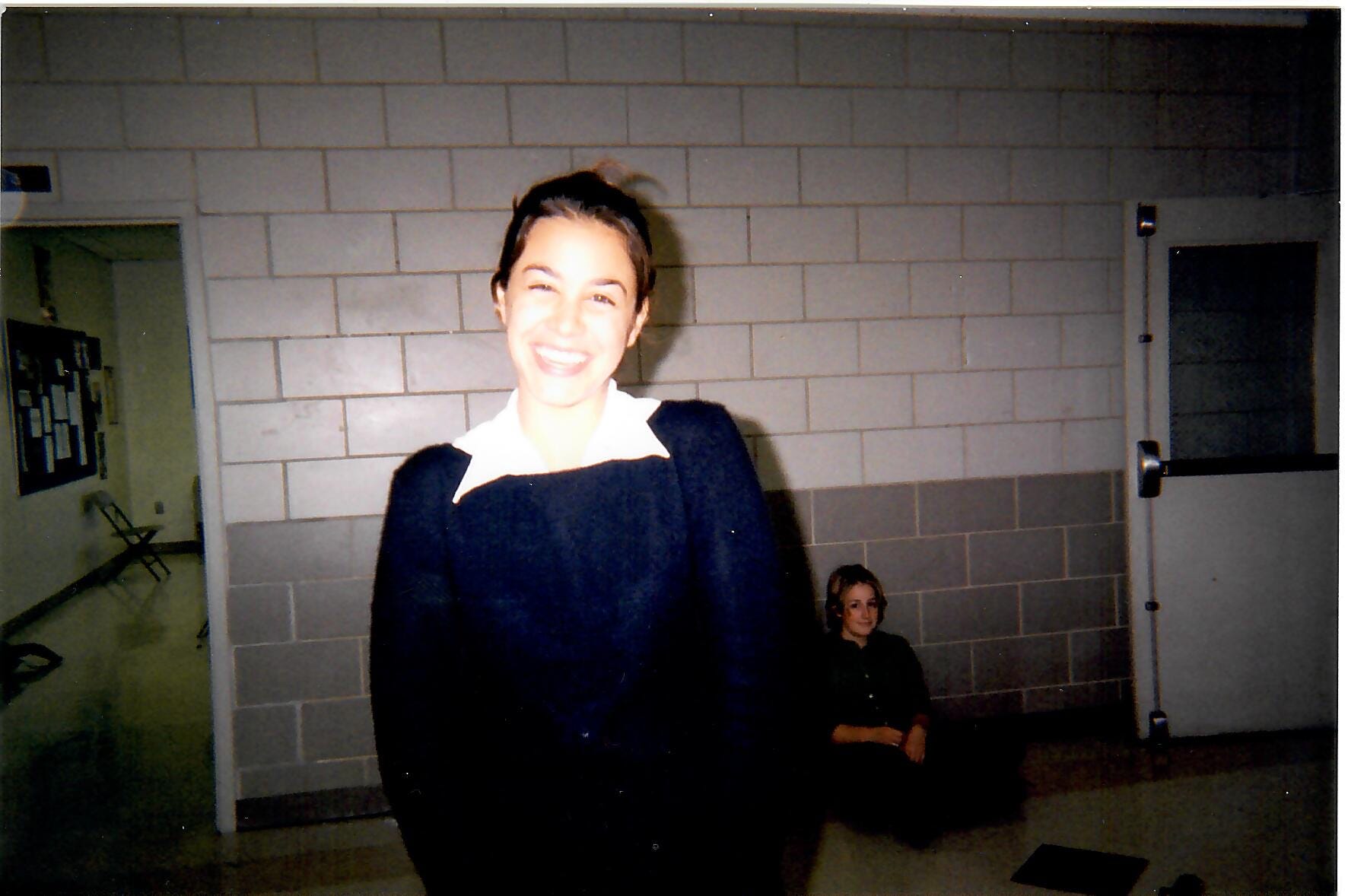
My parents dropped me off in the Dominican Republic to live with some of my family with no running water for a week. No warning, no itinerary. Just: here is where you come from, remember it. I was a student at a $50,000-a-year school. I went home with dirt under my fingernails and something cracked open in my chest that hadn’t been there before.
Then my teacher handed me The God of Small Things by Arundhati Roy, and I was simply not okay.
Poverty. Love that gets destroyed for existing in the wrong body, the wrong caste, the wrong zip code. A world with rules so cruel they eat the people who dare to feel things. I had just spent a week living adjacent to that weight. Not metaphorically. Physically. And here was Roy building it into language so precise it felt like she was writing about my family, my history, the specific grief of people who were never supposed to have nice things.
When the teacher said we could present our book report in any medium, everyone else made posters. One person did a diorama. (Respect, honestly. Commitment to the craft.) I made a playlist. I stood up, pressed play, and let the music do what the book had done to me: move through the room and find everyone it was meant to find.
I don’t remember every song. I remember it had range. Joy and heartbreak and destruction all in the same hour, because that’s what the book was. When it was over, the class wanted the CD. Not because it was impressive. Because it was true.
That was the day I understood: music is the feeling that lives underneath the words. And some of us hear it before we even realize we’re listening.
What a Playlist Actually Does (It Is Not Vibes Wallpaper, I’m Begging You)
Let me tell you what I see people do wrong. They put on a “reading playlist” that is just lo-fi beats or coffeehouse acoustic guitar or Taylor Swift and they call it atmosphere. They are not wrong exactly. But they are not doing what I’m doing.
A playlist built for a specific book is emotional architecture. It holds the shape of the story even after you’ve closed the cover and gone back to your life. It is the difference between a feeling that fades and a feeling that stays installed.
Here’s what it actually does in practice:
It keeps the world warm between sessions. I read like most adults do, meaning in stolen fragments. Before bed, during lunch, on a commute. The world of a book needs to stay alive when I’m not in it, or I lose the thread. A playlist is the door I can walk back through in the middle of a Tuesday. No reorientation required. I press play and I’m already there.
It deepens the characters. When I find the right song for a character, I suddenly understand them in my body, not just my head. I know how they walk into a room. I know what their silence sounds like. The song doesn’t tell me that. It confirms something I was already feeling but couldn’t articulate. It’s like the book and the music are co-signing each other.
It IS the re-read. And here I must address Sarah J. Maas directly, with love and exasperation, because her publication timeline has forced my hand. Sarah. Baby. We have been waiting. While we wait, I have Survivor by 2WEI on a playlist, and when it comes on during a run I am not on a trail in my sneakers anymore. I am on that mountain. Nesta is drawing the line in the sand. The Valkyries are defying every odd stacked against them. My pace picks up. My heart keeps time with theirs. By the time the song ends I have run faster than I had any business running and I am also slightly emotional on a public path. This is not a bug. This is the whole point.
The music doesn’t remind me of the book. The music is the book. Built differently, living in a different place in my body, but the same truth.
How It Starts (Spoiler: My Stomach Tells Me First)
People ask how I know when a book needs a playlist. The honest answer is I don’t decide. The book decides, and it communicates through my nervous system.
It starts with the drop. That specific feeling when a scene lands somewhere below the ribs and my body responds before my brain has caught up. If it happens once, I notice. If it happens again, the playlist has already begun, I just haven’t opened my Music yet.
When the writing is doing its real job, when the environment and the characters and the emotional stakes are all vibrating at the same frequency, you can hear it. I’ll be mid-chapter and suddenly there’s a sound in my head that isn’t coming from the page. A tone. A tempo. The ghost of a melody that belongs to this exact moment in the story. That’s my cue.
The playlist doesn’t start with a tracklist.
It starts with a feeling I’m trying to catch before it disappears. Then I go hunting for whatever sounds like that feeling.
Sometimes I find it immediately. Sometimes I’m cross-referencing Spotify playlists at midnight like a woman with a mission and no chill whatsoever. Both are valid.
The Hans Zimmer Confession
Once upon a time I wanted to be the Hans Zimmer of book playlists (NERD!). I’m telling you this because it’s true and also because I think it’s important to admit the full scope of your ambitions out loud at least once.
I wanted to score the emotional worlds of stories the way he scores film:
not describing the scene, not underlining the emotion, but becoming the truth of it. The music that makes you feel the thing before the thing happens.
That’s the standard I’m reaching for every time I build one of these. That dream evolved into a practice. And the practice became a form of advocacy I didn’t expect.
When I build a playlist for a book I love, I am making an argument. I am saying this story was written with enough emotional precision that it demanded a response in a completely different medium. That is not a small compliment. You cannot fake it. You cannot build a genuine playlist for a book that didn’t move you. The songs won’t come, or they’ll come wrong, and you’ll know.
Music also does something that reading alone sometimes can’t: it liberates you from your actual life long enough to feel something real.
A song can reach into a Tuesday and pull out the exact feeling you had at 2am with a book that was rearranging your furniture. That is survival infrastructure for people whose inner lives need tending, and I will not apologize for taking it seriously.
Dominican culture never taught me to apologize for this, either. Music is not background noise where I come from. It is how you say the things that words make too small.
It is grief and joy and desire and resistance all in the same room, the same song, the same body.
Growing up with that in my bloodstream means I have never understood the premise that silence is the serious way to read. Silence is fine. But sometimes the book is asking.
Why It’s in the Rubric (Non-Negotiable, Unmovable, Final)
This is why 🎧 Soundtrack Potential lives in the Dragon Reads rubric as a scored category. Not as a fun bonus. Not as an optional vibe check. As a real metric, weighted equally with character and pacing and chemistry.
Because a book with cinematic energy, with scene-level emotional clarity, with characters specific enough to have a sound, that book is doing something above the baseline. It earned the score. And a book that leaves me with nothing to play? That tells me something too. Not that it’s bad necessarily. But that it stayed on the surface. That it didn’t get deep enough to resonate with anything outside itself.
If the book didn’t ask for music, the dragon noticed.
The standard was set in a privileged classroom by a sixteen-year-old girl with a burned CD and a room full of classmates who suddenly understood a book they thought they’d already finished. They hadn’t finished it. They’d just read the words. The music was the part that made it land.
That’s still what I’m chasing. Every playlist, every review, every score.
The playlist came first. It always does.
Thank you for sharing how your playlist making journey has started and it’s nice to see how people relate to books and stories.
I can totally relate to your love for music and books and how they just miraculously combined. Also I like the Hans Zimmer comparison, though I kinda like John Williams more🩷📖🎶